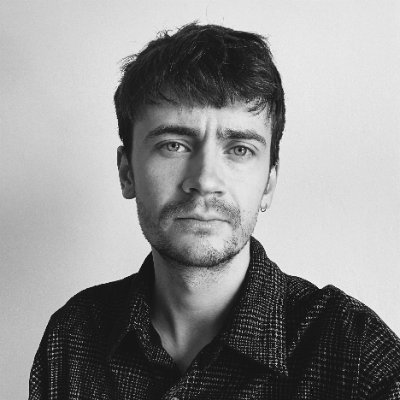
Robert Lucas Scott (University of Cambridge)
3-5pm, 25March
Dalhousie Building, Room 2F13
University of Dundee
Online on Teams: SCCP Seminar – Robert Lucas Scott | Meeting-Join | Microsoft Teams
Abstract
Thinking and acting, for Gillian Rose, are matters of risk. The outcomes of critical rationality, political action, even a love affair, cannot be secured or guaranteed in advance. Instead, they can only be discovered “by taking the risk of action, and then by reflecting on its unintended consequences, and then taking the risk, yet again, of further action, and so on.” Both theory and practice involve the “risk of positing and failing and positing again.” Politics in particular, she writes, “does not happen when you act on behalf of your own damaged good, but when you act, without guarantees, for the good of all—this is to take the risk of the universal interest.”
With reference to her readings of Hegel’s critique of Fichte (in Hegel Contra Sociology) and Kierkegaard’s pseudonymous rewriting of the binding of Isaac (in The Broken Middle), this paper will explore the meanings of risk and action in Rose’s work. It will argue that, between her earlier and later work, Rose develops her theory of the “risk of action” from one of a largely abstract imperative to act against historical necessity into a phenomenology of revolutionary subjectivity which persists in acting even as it is repeatedly returned to and confronted with its historical constraints. The paper also advances a Rosean critique of Slavoj Žižek’s theory of the “abyssal” act which, despite some cosmetic similarities with Rose’s theory, ultimately renounces the risk of an impure beginning in the middle in favour of the fantasy of a pure beginning.
Robert Lucas Scott is an Arts Research Fellow at Jesus College, University of Cambridge. He is the author of Reading Hegel: Irony, Recollection, Critique (University of Chicago Press, 2025) and an editor of Gillian Rose’s Marxist Modernism lectures (Verso, 2024). He is currently writing a book on Gillian Rose and the difficulty of beginning under conditions of loss and historical belatedness.